
Singapore's AI Chatbot Transparency Guidelines 2026
On 20 July 2026 IMDA asked every consumer-facing generative AI chatbot to publish a plain-language 'info card'. This report explains the three principles and what to disclose.
IMDA, CSA, EDB, grants, AI governance, procurement rules, and public-sector technology policy for Singapore decision-makers.
8 insights in this category
Buyer resources
8 results
On 20 July 2026 IMDA asked every consumer-facing generative AI chatbot to publish a plain-language 'info card'. This report explains the three principles and what to disclose.
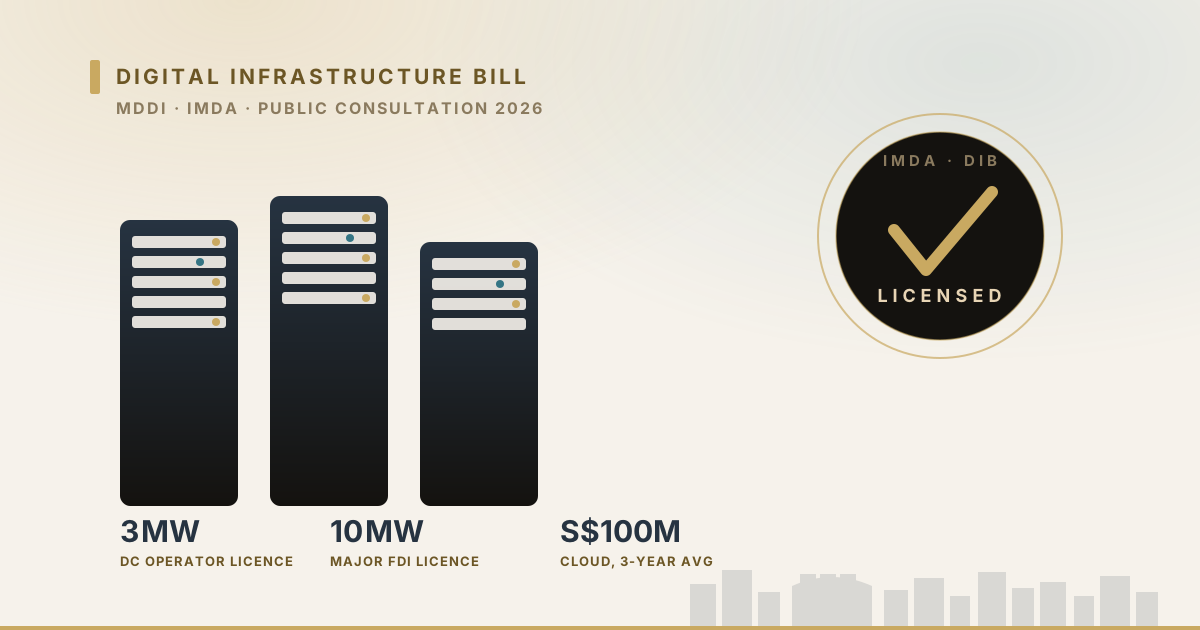
On 1 July 2026 Singapore opened consultation on a Bill to license data centres and major cloud. Proposed scope starts at 3 MW; penalties would reach 10% of local turnover.

A fact-checked map of the Singapore technology ecosystem in 2026: how startups, public policy, investment, AI infrastructure and enterprise adoption reinforce one another — and where a buyer or founder still needs to do the hard work.

Singapore ranks fourth in the world for startups and took 94 cents of every dollar invested in Southeast Asian tech this year. Here is what that buys — and what it costs.

Singapore pulls in close to two-thirds of the region's venture capital and nearly half of Asia's corporate headquarters — without being where most of the growth actually happens. That gap is the strategy, and the risk.

The OpenAI for Singapore partnership and Applied AI Lab are real deployment signals. They do not substitute for a buyer's own data, governance, procurement, and operating decisions.

Singapore's Minister for Foreign Affairs Dr Vivian Balakrishnan walked through a fully local AI stack — Ollama, whisper.cpp, NanoClaw, and Obsidian on a Raspberry Pi — in his 16 May keynote at AI Engineer Singapore.

NAIS 2.0 is no longer the whole story. The 2026 update, National AI Impact Programme and governance guidance give Singapore firms a clearer deployment path — but not an automatic approval or grant.